
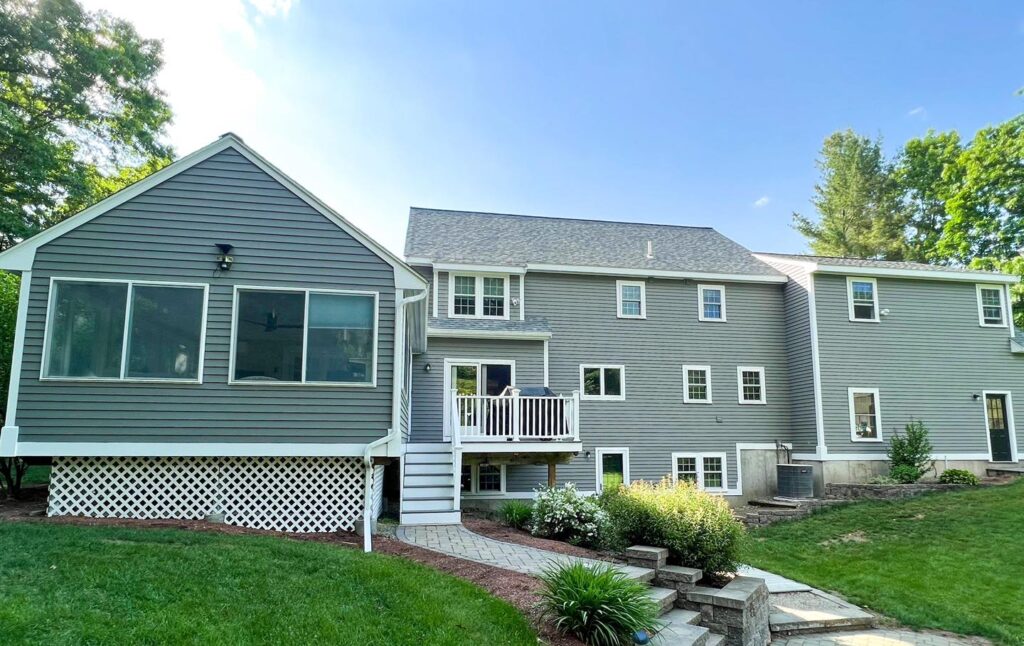
Fall is the right time to inspect your home’s siding for damage, moisture, loose panels, and other issues that could become worse during a New England winter. Before snow, ice, freezing temperatures, and strong winds arrive, homeowners should check their siding, the areas around windows and doors, and their gutters and downspouts for signs that the exterior needs repair or replacement.
A fall siding inspection does not have to be complicated. Knowing what to look for can help you catch problems early and determine whether a small repair is enough or if it may be time to consider new vinyl siding.

1. Look for Cracked, Warped, or Damaged Siding
Walk around your home and look closely at the siding panels. Cracks, warping, holes, or other visible damage can indicate that your siding is no longer providing the level of protection your home needs.
Pay particular attention to areas that are exposed to heavy weather, such as corners, lower sections of the home, and walls that receive a lot of wind or precipitation.
With vinyl siding, individual panels can sometimes become damaged without the entire exterior needing to be replaced. However, widespread damage or siding that is deteriorating across multiple areas of the home may be a sign that replacement is worth considering.
2. Check for Loose or Missing Panels
Strong summer storms and fall winds can loosen siding panels or cause sections to pull away from the home. Look along the edges and seams of your siding to see if anything appears out of place.
Loose siding can become more vulnerable when winter weather arrives. Snow, ice, and strong winds can put additional stress on already damaged or improperly secured panels.
If you notice siding that is pulling away from the house, it is a good idea to have it evaluated before winter.

3. Look for Signs of Moisture Damage
Your siding helps protect your home from rain and snow, but damaged or improperly sealed areas can allow moisture to get behind it.
Look for signs such as:
- Discoloration or staining
- Mold or mildew
- Soft areas around the exterior
- Bubbling or unusual changes in the siding
- Water stains near windows or doors
- Deterioration around seams and joints
Moisture problems are particularly important to address before winter. Repeated freezing and thawing can make existing exterior issues more difficult to manage.
4. Inspect the Areas Around Windows and Doors
The places where siding meets windows, doors, corners, and other exterior features deserve a closer look.
Check for visible gaps, damaged trim, or areas where the siding appears to be pulling away from the surrounding materials. These transitions need to be properly installed and sealed to help keep moisture out.
If you are already noticing drafts or moisture around your windows, it may also be worth evaluating the condition of the windows themselves. In some cases, homeowners choose to coordinate siding and window replacement as part of a larger exterior remodeling project.
5. Check for Fading and Deterioration
Some fading is normal as siding is exposed to years of sunlight and changing weather. However, significant fading, chalking, cracking, or general deterioration can be a sign that your siding is reaching the end of its useful life.
If your siding looks worn throughout the entire exterior rather than in just one isolated area, fall can be a good time to start discussing replacement options.
Modern vinyl siding comes in a wide range of colors, styles, textures, and profiles, making it possible to update the appearance of your home while improving its exterior protection. DLM Remodeling installs CertainTeed vinyl siding in Massachusetts, with options designed to complement different home styles.

6. Check Your Gutters and Downspouts
Your siding and drainage system work together to protect your home’s exterior. Before winter, make sure gutters and downspouts are directing water away from the house.
Clogged gutters can cause water to overflow against the siding, while damaged or poorly positioned downspouts can leave water pooling near the foundation.
Keeping your gutters clear is a simple fall maintenance task that can help reduce unnecessary moisture exposure to your siding and other parts of your home’s exterior.
Need New Vinyl Siding in Massachusetts?
DLM Remodeling provides vinyl siding installation and replacement for homeowners throughout eastern Massachusetts and the Greater Boston area. The team works with CertainTeed siding and can help homeowners choose a style and color that fits their home while providing reliable protection from New England weather.
If you’re considering replacing your home’s siding, DLM Remodeling can provide a free, in-person estimate and walk you through your options before the project begins. Fill out our contact form or call us directly at 339-224-1266.